
How to Check Criminal History in Boston
Boston has no documented one-box criminal-history portal. The practical route begins with Boston Police for an agency report or with Municipal Court for a city citation. A jail inquiry answers custody, not guilt. Thomas County court files show filed state charges and outcomes, while GCIC holds a separate statewide criminal-history record under Georgia dissemination rules.
- Confirm whether Boston Police or another agency handled the incident.
- Submit the Boston Police web form with the known report identifiers and required identification image.
- Call the city clerk for Municipal Court citation and docket information.
- Check Thomas County Jail and the correct county clerk when booking or state charges followed.
- Use GCIC self-review or Georgia Felon Search only for the statewide question each service answers.
The Thomas County criminal history overview explains the county and repository layers that sit beyond Boston's own records.
Boston Police Records Form
Boston Police provides a web form specifically for law-enforcement records. It asks for the requester's name, date of birth, address, telephone number, email, case number, incident location, incident date, involved parties, and reason for the request. A driver's-license image is required. The stated reasons are Victim, Offender, Legal Counsel, or Open Records Request. Supplying a known case number and exact incident details reduces the risk of an ambiguous search.
The reason choices describe the requester's connection to the file, not a promise that every part will be released. Georgia exemptions may still protect investigative details, victim information, personal identifiers, or sealed material. When the case number is unknown, provide a narrow date range, street location, and names as recorded at the time. Ask Boston Police to identify any lawful fee or required affidavit before production begins.
The official Boston Police open-records form displays those identity and incident fields.
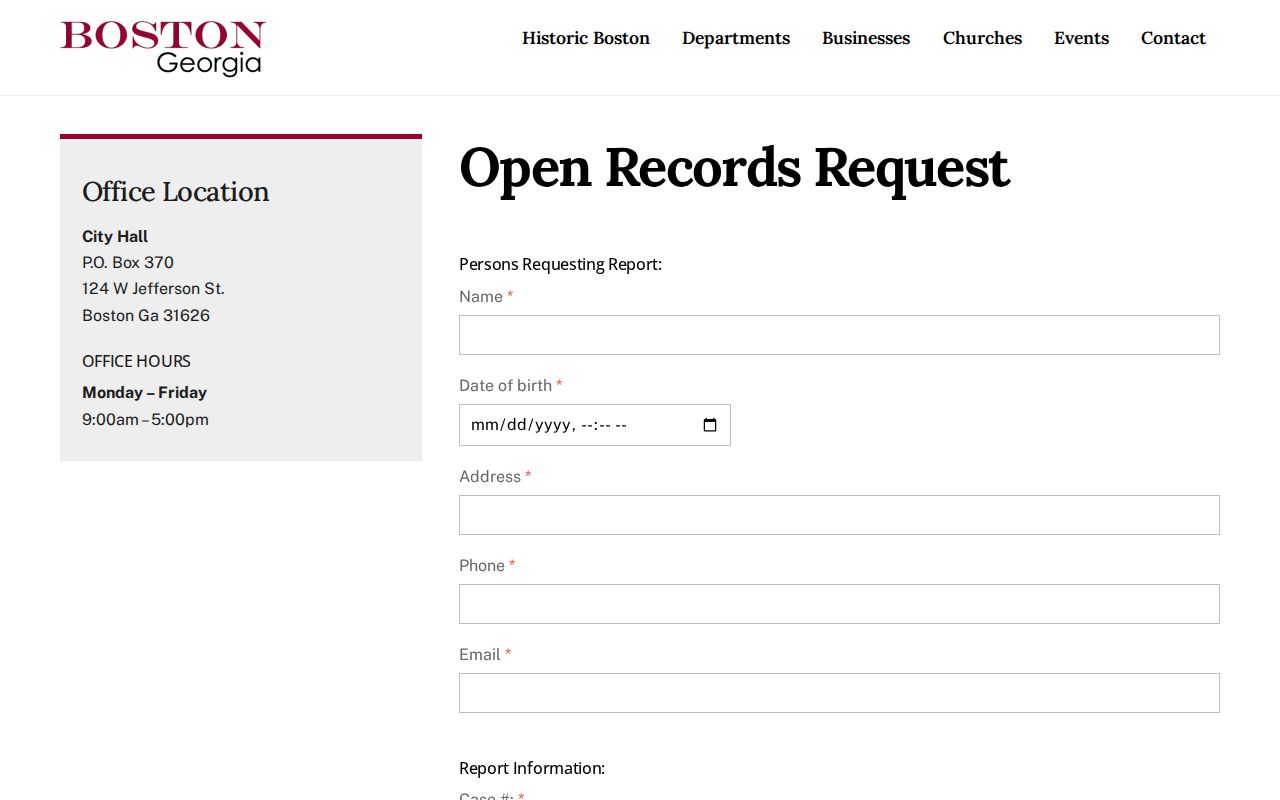
The form's required identification upload and detailed incident fields distinguish Boston's police process from a simple public name search.
The Boston Police Department
Boston Police describes itself as a full-service agency operating around the clock with six officers and two K-9 teams. Emergency calls go to 911, while the police contact number is (229) 498-8024. The department creates reports for events it handles within Boston, but a report remains an agency account and is not the same as a booking record or a court judgment.
The department page presents 120 South Main Street for report submission and 124 West Jefferson Street in its office and city contact block. Because both addresses appear on the official page, call before traveling and ask where records are currently accepted. That small step prevents a Boston requester from arriving at the wrong counter or assuming that the web form has routed an in-person appointment.
The official Boston Police Department page supplies the department description and contact information.
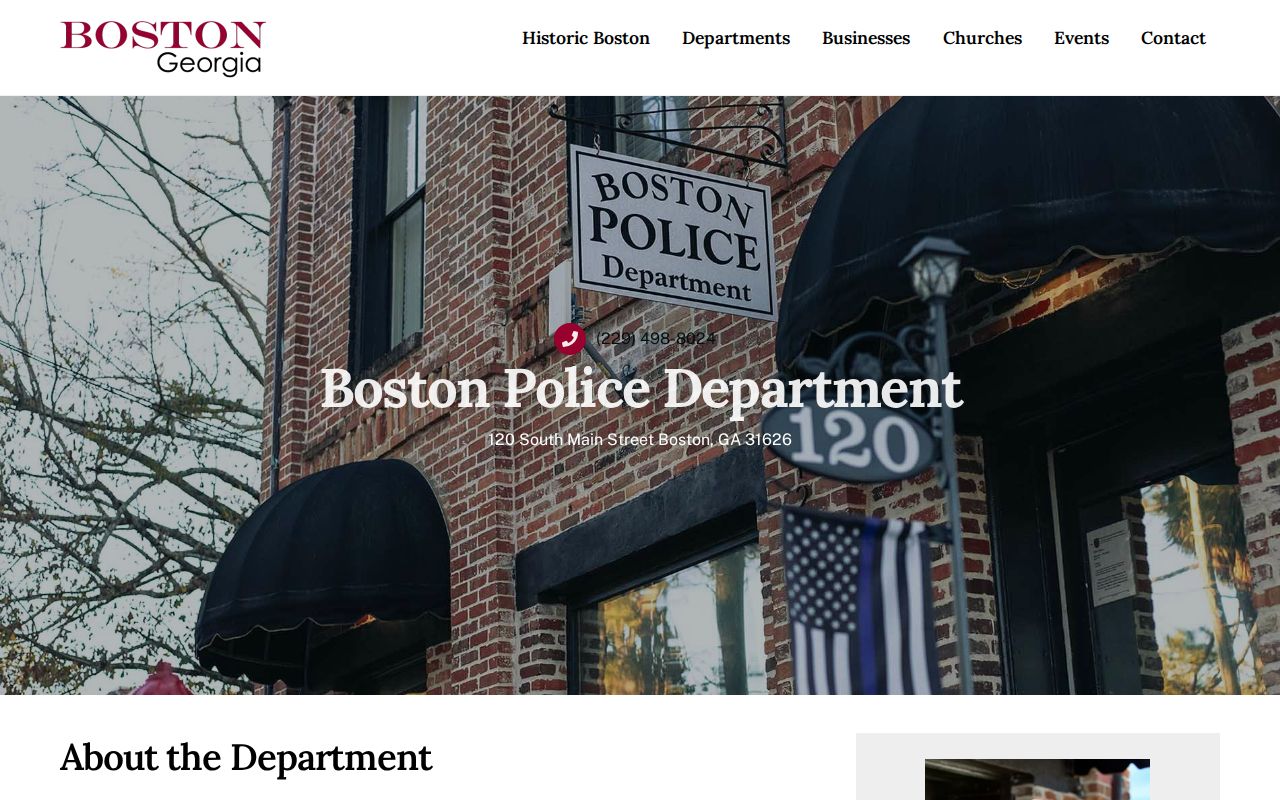
The two displayed address blocks are a useful reminder to verify the current Boston report-submission location by phone.
Boston Uses Two Records Forms
Boston separates police material from general city records. The police web form is the right route for law-enforcement reports. A different city PDF covers non-police records and expressly excludes police records. The city form can be submitted at City Hall, by mail to P.O. Box 370, or by email to kallen@bostonga.com.
| Police Form | Law-enforcement reports; asks for incident details, request reason, and a driver's-license image. |
|---|---|
| City Form | General city records only; expressly excludes police records. |
| City Submission | City Hall, P.O. Box 370, or kallen@bostonga.com. |
| Best Identifier | Case number, incident date, location, and involved parties for a police request. |
Sending a police request on the general city PDF is the wrong channel. If the subject is unclear, call Boston City Hall at (229) 498-6743 before submitting either form.
The general city PDF includes requester contact and mailing information, a description of the records, signature and date, plus staff fields for receipt, delivery method, page count, copies, charge, and comments. Those fields help with administrative files but do not override the police exclusion. Keep the submitted form and acknowledgment so Boston can trace the request if it is redirected.
Arrests and Bookings in Boston
Boston Police holds its arrest or incident report. No separate official Boston booking roster was documented. When Thomas County booking is confirmed, the Thomas County Jail at 921 Smith Avenue creates the custody record and can be reached at (229) 225-3312. Its official roster offers name, date, current, and released views, but roster data is a changing intake snapshot rather than a court finding.
Do not infer the jail from the city name alone if another agency made the arrest or transported the person elsewhere. Ask Boston Police for the arresting agency, approximate arrest date, and destination. For older booking material, contact the jail or use an Open Records Act request. Once a prosecutor files charges, the appropriate clerk supplies the docket and disposition, which may differ from the allegation recorded at arrest.
When Boston Has No Booking Search
The lack of a Boston-only roster is an actionable fact. First call Boston Police at (229) 498-8024 to confirm whether the department handled the event. Next call the receiving jail for present custody. If Thomas County accepted the booking, use the sheriff's official roster and jail line. If no current entry appears, ask whether the person was released, transferred, or booked under a different verified spelling.
For a historical event, request the Boston agency report and then the booking record from the receiving jail. For legal outcome, search the filed court case. GDC Find an Offender is meant for state custody and will not reliably show a new Boston booking. Georgia VINELink can provide participating custody information and notifications, but it does not replace the source record.
Boston Municipal Court Records
Boston Municipal Court handles traffic and city-ordinance citations. No official public case-search interface, field list, or fee table was located. The useful fallback is the city clerk at 124 West Jefferson Street, (229) 498-6743, Monday through Friday from 9 a.m. to 5 p.m. Give the clerk a citation or case number, name, approximate date, and type of city matter.
| Court Name | Boston Municipal Court |
|---|---|
| Case Types Heard | Boston traffic citations and city-ordinance matters. |
| Case Lookup Channel | City clerk by telephone or at 124 West Jefferson Street; no public online search was confirmed. |
| What the Docket Shows | Citation, schedule, plea, disposition, and financial entries that exist and remain public. |
| Copies & Fees | Ask the clerk for available formats and a current estimate because no official municipal fee table was found. |
A Boston city citation does not become a Thomas County felony file. Superior Court handles felonies, and State Court handles state-law misdemeanors and traffic within its jurisdiction.
Boston Citations Versus County Cases
The issuing authority points to the first custodian. A Boston ordinance or traffic citation belongs with Municipal Court. A warrant or first appearance may involve Magistrate Court. A felony prosecution belongs in Thomas County Superior Court, even when Boston Police made the initial arrest. State-law misdemeanors generally move through State Court.
This split explains why a name may appear in a police report but not a Boston municipal docket, or why a county filing lists a charge different from the arrest allegation. Prosecutors screen the case and choose the accusation or indictment. The clerk then records motions, pleas, disposition, and sentence. For the filed outcome, consult Thomas County criminal court case records rather than relying on a Boston police report.
Where Boston Records End Up
Boston Police keeps the local report. A receiving jail keeps the booking record. The relevant prosecutor decides what case to file, and the county clerk records later court events. Fingerprintable arrest data may be submitted to GCIC, followed by a court disposition. Each file has a different purpose, and delays or unmatched identifiers can leave the systems temporarily out of step.
Record flow: Boston Police Department › Thomas County Courts › Georgia Bureau of Investigation, Georgia Crime Information Center
Use Boston's form for the event record, a jail channel for custody, a clerk for the case outcome, and GCIC for statewide self-review. If a GCIC arrest cycle lacks a final result, obtain the certified disposition and follow the GBI correction procedure.
Boston Police at City Scale
Boston's official 2020 Census population was 1,207. Its police page reports six officers and two K-9 teams. These figures describe a small city operation, not a prediction of crime or records volume. They do help explain why direct contact and a detailed request form are central to Boston access rather than a large searchable city database.
Small-city scale also makes careful identifiers useful. A date, location, and case number let Boston staff distinguish a police incident from a municipal citation or unrelated county file. Do not turn Census size into a crime rate. A valid crime comparison needs a named agency, year, reporting coverage, and a distinction between incidents and offenses from Georgia's official NIBRS or UCR source.
The official Census profile for Boston provides the whole-city population context.
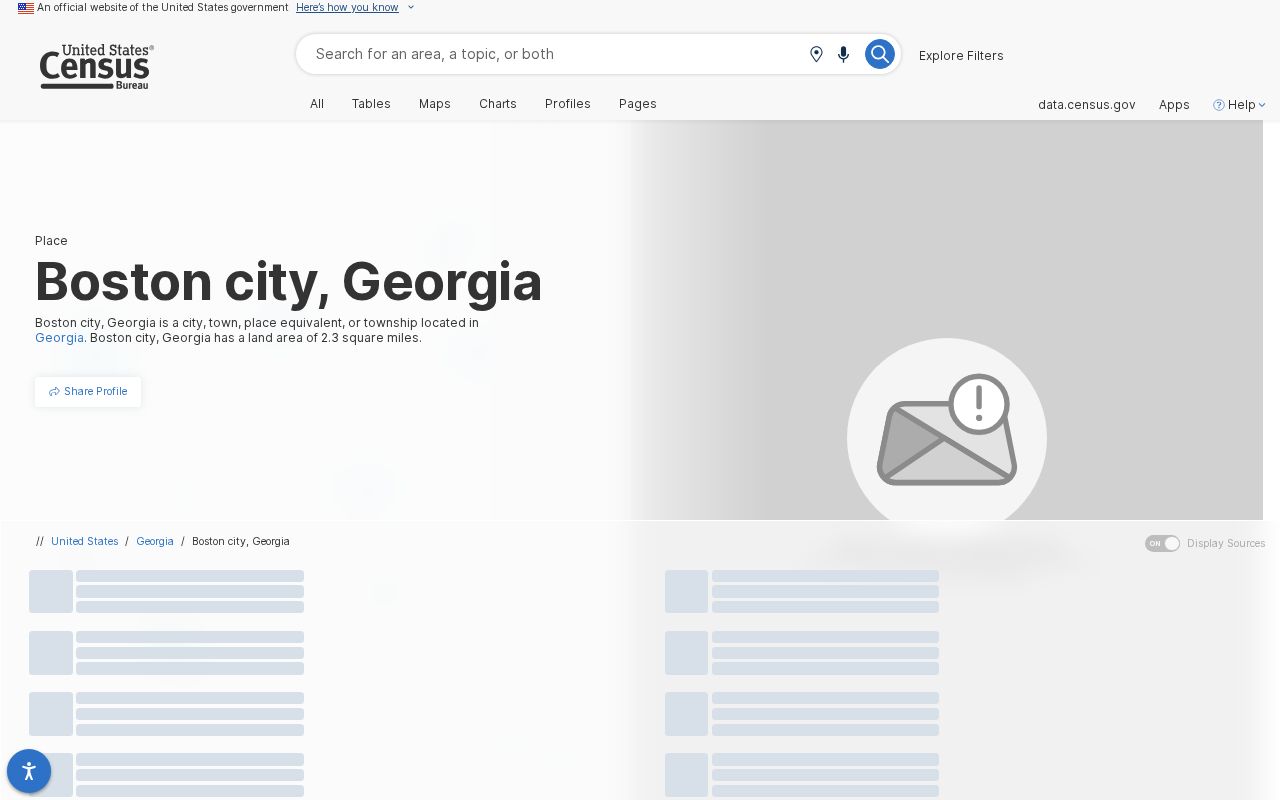
The Census source establishes Boston's scale while police and court sources remain the authority for any specific record.
Boston Records and Railroad History
Boston incorporated in 1870. The official city history traces Old Boston to the Parramore stagecoach stop, describes a local naming tradition dating to 1837, and explains the settlement's 1861 move connected with the railroad. The city also highlights its Carnegie Library and restored downtown streetscape. Those civic milestones help identify likely sources for historical research, but current police and court files still require the modern custodians named above.
The city's official Boston history describes the stagecoach, railroad, library, and downtown story.
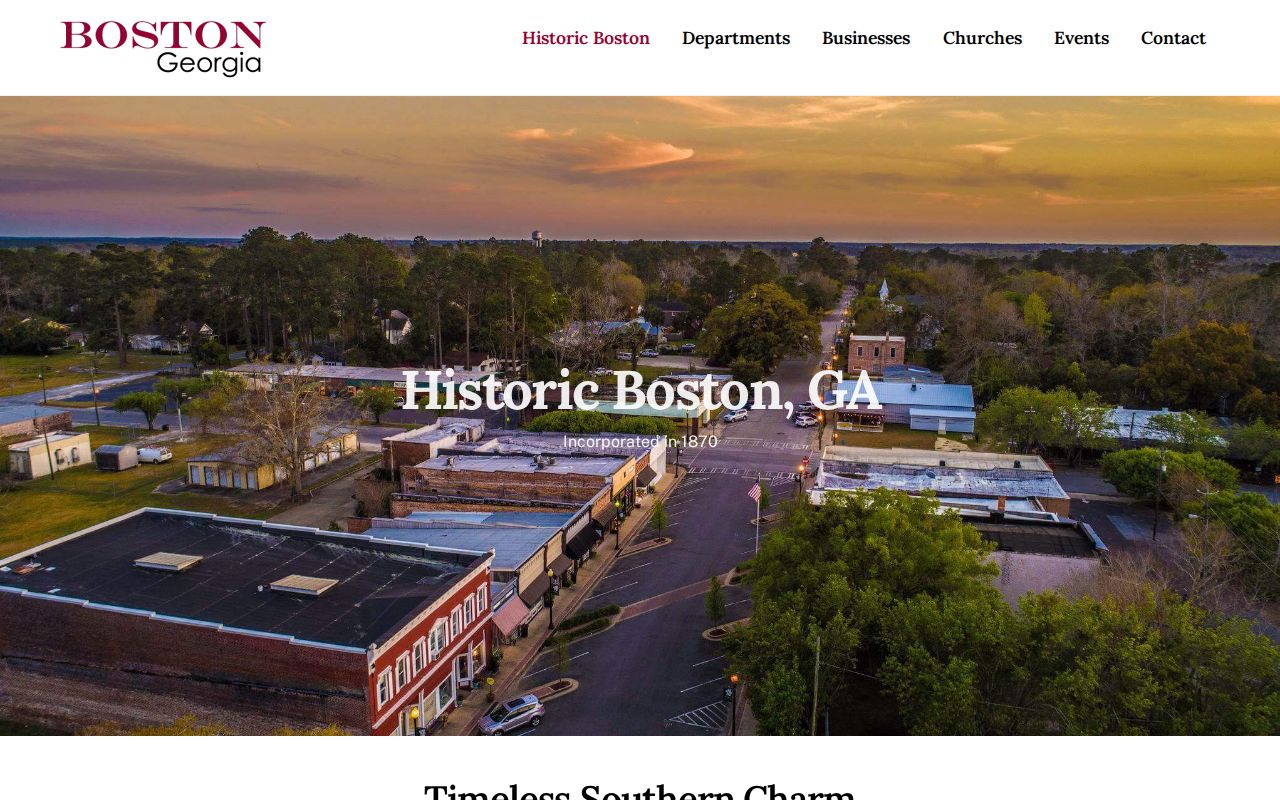
Historical context can guide archive questions, while a recent criminal or citation record belongs with Boston Police, Municipal Court, or the receiving county office.
Public Access Rules for Boston Records
Boston records are governed by the Georgia Open Records Act, including its broad access policy, three-business-day response framework, lawful production costs, and exemptions. Pending investigative details, protected victim information, personal identifiers, security material, and sealed records may be withheld or redacted. A custodian need not create a new summary that does not exist.
If a Boston request is denied, ask for the exact legal basis and any segregable public portion. Court sealing and GCIC record restriction are separate processes. Restricting eligible repository history does not automatically erase every courthouse record, and a city custodian cannot change a Thomas County or GCIC file.
Key Statutes:
Georgia Open Records Act, O.C.G.A. §§ 50-18-70 through 50-18-77 - Sets access, response, cost, and exemption rules for existing public records.
O.C.G.A. § 35-3-35 and GCIC Council Rules - Govern release and use of Georgia criminal-history information.
Georgia Uniform Superior Court Rule 21 - Governs court-record access subject to sealing law and orders.