
Running a Sex Offender Check in Thomas County
The Georgia public registry is the main search channel. Select Thomas County, or narrow by name and geographic fields. The sheriff at 921 Smith Avenue handles local registration and address-verification questions.
The official registry supplies this image.
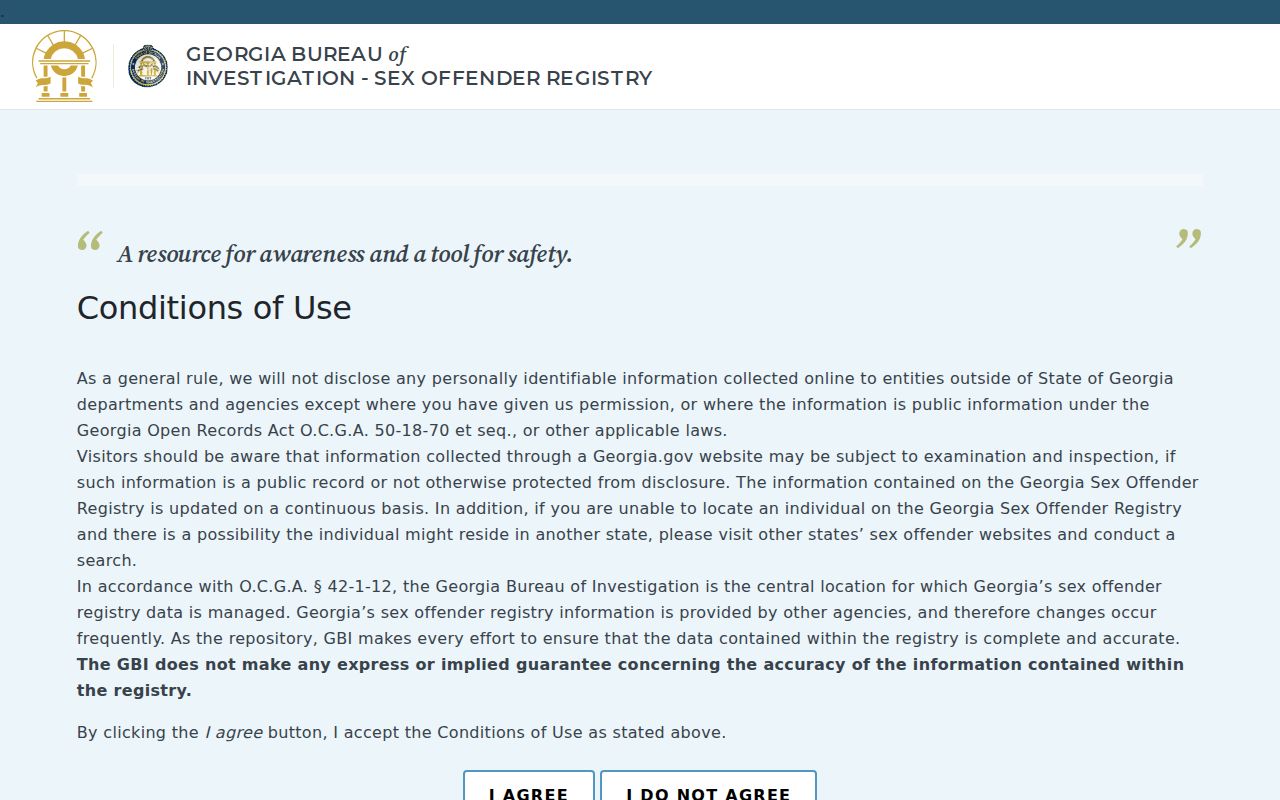
Use the live interface for current status because saved results can age quickly.
Thomas County Address Verification
Local sheriffs register and verify residents under Georgia law. Call the Thomas County Sheriff's Office at (229) 225-3300 and ask for the sex-offender registration unit about appointments or a possible address error. Give the profile name and a precise concern. Never confront a registrant or household.
The GBI maintains the statewide system, but the sheriff of residence is the practical local contact for verification and suspected noncompliance.
Searching the Georgia Sex Offender Registry
Read the conditions of use first. Spelling matters in name mode. Geographic modes cover county, city, ZIP, and an address-radius search. Current options should be read from the live form.
- Open the official GBI search and accept its conditions.
- Choose name search or Thomas County, city, ZIP, or address filters.
- Compare aliases and physical details before matching a result.
- Open the profile and check status, address, offense, and verification data.
| Field Label | Type | Required | Notes |
|---|---|---|---|
| Last Name | Text | Mode-dependent | Spelling affects results |
| First Name | Text | No | Narrows a common surname |
| City / ZIP | Text or select | No | Uses registered location |
| County | Select | No | Select Thomas |
| Address / Radius | Text and select | Address mode | Proximity search |
When a Thomas County Name Is Missing
No result does not settle every question. A query may be narrow, an alias may differ, the person may not qualify for public display, or an update may still be moving through the system. Broaden the search and contact the sheriff or GBI with a concrete concern.
The GBI registry guide supplies this image.
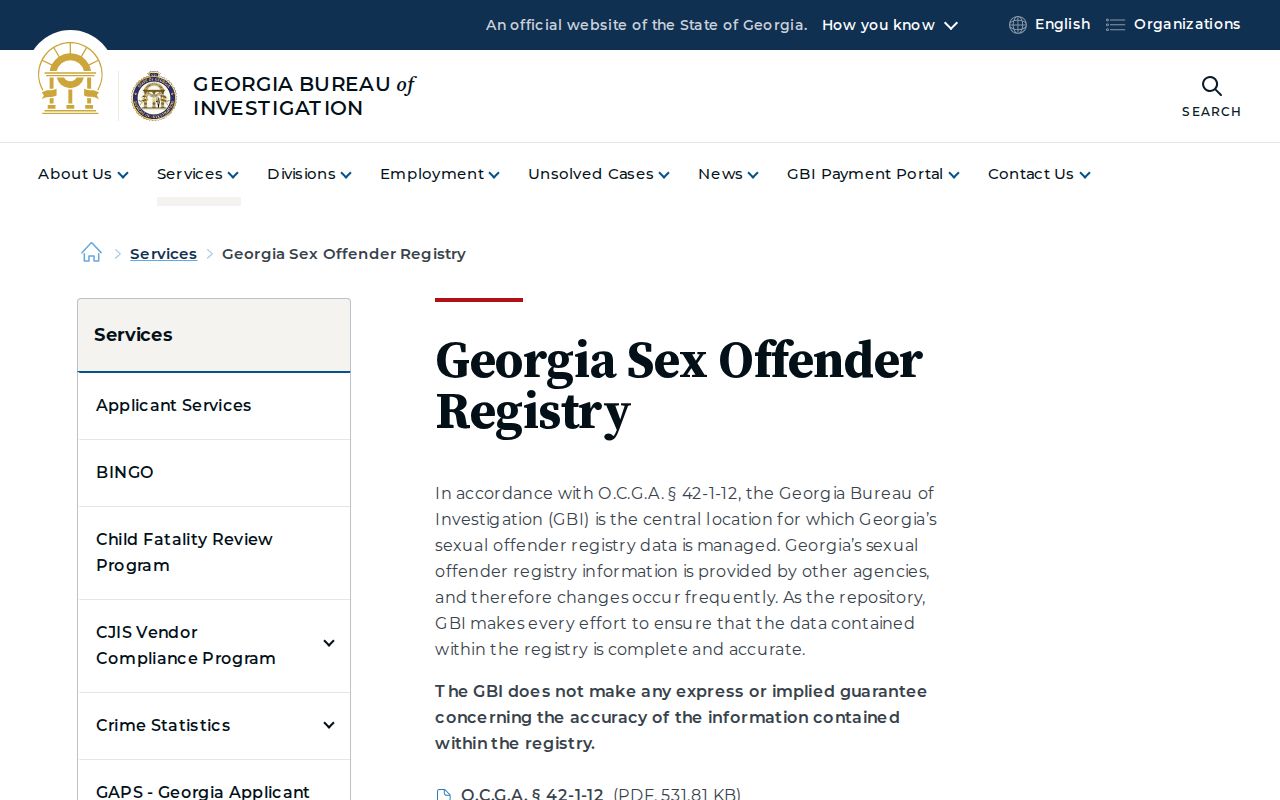
The guide provides legal context that a name-result list cannot.
What a Registry Profile Shows
A profile can display identity, description, residence, conviction, vehicle, employment or school, and registration information when legally public. Read its date and status fields with care.
| Name & Aliases | Legal and reported alternate names. |
|---|---|
| Photo & Physical Description | Photo, sex, race, build, hair, eyes, and marks. |
| Registered Address | Public reportable residence information. |
| Offense & Statute | Qualifying offense and conviction data. |
| Classification | Georgia risk classification where applicable. |
| Registration Status | Current status and verification details. |
GBI Search Versus NSOPW
The Georgia registry provides state-specific details and Thomas County filtering. The Justice Department's NSOPW queries participating jurisdictions and helps with cross-state checking. Neither replaces local verification if an address looks wrong.
NSOPW supplies this official image.
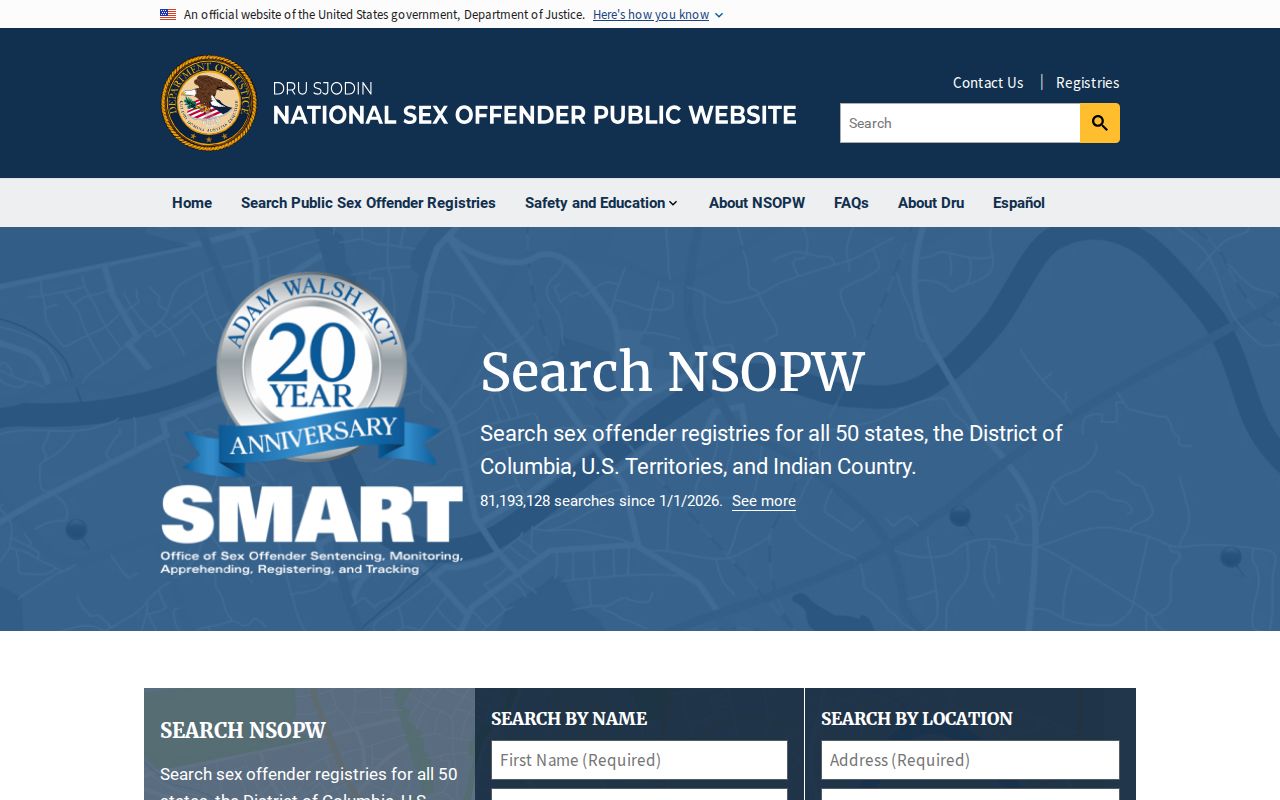
The national layer broadens geography, while GBI gives Georgia-specific context.
Registration Requirements and Levels in Georgia
Georgia does not present its system as a simple federal Tier I, II, and III chart. Duration and classification depend on conviction date, offense, statutory category, and risk classification. Registration is generally for life, though some people may petition for release under O.C.G.A. § 42-1-19.
| Level / Tier | Duration | Verification Frequency |
|---|---|---|
| Level I | Generally lifetime unless relief applies | Statutory sheriff verification |
| Level II | Generally lifetime unless relief applies | Statutory sheriff verification |
| Sexually dangerous predator | Generally lifetime | Enhanced duties may apply |
Thomas County Reporting Duties
O.C.G.A. § 42-1-12 includes prompt change reporting and annual birthday-period verification. The research identifies a 72-hour reporting rule, though the exact duty depends on the event and category. Residency, work, and school restrictions under O.C.G.A. §§ 42-1-15 and 42-1-16 also depend on offense and conviction dates.
Noncompliance can carry separate felony penalties. Report a suspected address problem to the sheriff instead of investigating a person yourself.
Reading Thomas County Registry Profiles
A photo and address can look conclusive, yet each field has limits. Compare aliases, physical description, conviction jurisdiction, offense text, status, and last-verification data before matching a result. A listed offense describes the qualifying conviction. It does not support claims about conduct beyond the official record.
Vehicle, employer, school, scars, marks, tattoos, and supervision details may appear when Georgia law makes them public. A missing field can reflect display rules, timing, or classification rather than proof that the fact does not exist. Report a possible address error to the Thomas County sheriff.
Georgia's Level I, Level II, and sexually dangerous predator labels are not a federal tier chart. Conviction timing, offense category, legal changes, and classification decisions shape registration duties. A petition for release under O.C.G.A. § 42-1-19 is not automatic, so rely on the current GBI profile until official records show a change.
Geographic results depend on the chosen mode. A Thomas County filter finds profiles registered to the county, while a city or ZIP query follows stored location data. An address-radius search answers a proximity question. Check the live map and radius before drawing conclusions about a boundary.
NSOPW helps when a search crosses Georgia's border or a person has lived elsewhere. Its display and timing can differ from GBI because it queries participating jurisdictions. Return to the originating state registry for detail, then contact the responsible sheriff if an address or status seems wrong.
Public registration and a general criminal-history check are separate systems. Record restriction does not automatically end registry duties, and a registry profile is not a full account of arrests or court cases. Keep the inquiry tied to safety and current official facts.
If an address appears inaccurate, record the profile name, date, and exact discrepancy. Give those facts to the sheriff of residence. Use emergency law enforcement for an immediate threat. Do not visit the address, contact household members, circulate accusations, or organize private enforcement.
Annual birthday verification and prompt change reporting are ongoing duties, so a profile can change after a saved search. Recheck the live registry before relying on an older result. The sheriff remains the source for a local compliance concern.
Searchers should also distinguish residence from a mailing assumption. City and ZIP filters use information in the registered profile, while the county filter is the better first pass for Thomas County as a whole. A nearby result can fall outside the county line, and a county result may use a mailing city that differs from the nearest incorporated place.
Offense descriptions require the same care. The profile may show statute, conviction jurisdiction, date, and sentence or release information. Those fields explain why the registration entry exists. They do not show every court filing, later appeal document, or unrelated criminal matter. Use the originating court if the exact judgment is needed.
Residency, employment, and school restrictions have changed through statutory and constitutional history. O.C.G.A. §§ 42-1-15 and 42-1-16 must be applied with attention to the offense and conviction date. Do not turn a map pin into a legal conclusion about whether an address is permitted.
The registry can show conviction jurisdiction, offense description, sentence or release information, residence, vehicles, aliases, and identifying marks when those fields are legally displayed. Each field answers a limited question. The public profile is not the complete court file, and it should not be expanded with rumors, social-media claims, or third-party people-search data.
Georgia registration is generally for life, yet O.C.G.A. § 42-1-19 provides a petition route in qualifying circumstances. A petition does not itself change the public record. The court must act, and the registry must reflect the lawful result. Until then, use the current GBI status. Likewise, record restriction under Title 35 does not automatically cancel a separate registration duty.
Noncompliance has its own consequences under O.C.G.A. § 42-1-12. A suspected failure to report an address or other required change belongs with the Thomas County sheriff, not a neighborhood confrontation. Give the office verifiable facts, such as the profile viewed, the date, and the specific discrepancy. This preserves safety and lets trained officials check information that may not be public.
Before matching a common name, compare aliases, age or birth information as displayed, race, sex, height, weight, hair, eyes, marks, and conviction jurisdiction. One similar field is not enough. The registry's photograph is an identification aid, while the name and offense data provide the legal context. If the match remains uncertain, ask the registration office rather than publishing a conclusion.
Address data also has a time dimension. A person may have reported a move that is awaiting display, or a saved result may predate the latest verification. The profile's status and verification fields help, but they do not guarantee what is occurring at an address at this moment. That is why the sheriff receives address-error reports and performs local verification duties.
Personal and family safety steps should remain neutral and practical. Recheck official sources, use available public notification tools, teach household members to follow ordinary safety rules, and contact law enforcement about a specific threat. Do not use registry information to deny lawful services, target a household, or encourage others to harass someone. The GBI conditions of use apply even when information is widely shared online.
Lawful Use and Community Notification
Registry data supports family safety and community awareness. Use it to understand official status and plan lawful precautions. It is not permission to threaten, shame, follow, exclude, or punish a person or household.
Misuse is unlawful: Georgia's conditions prohibit harassment, threats, intimidation, and vigilantism. Misusing registry information may be a crime. Contact law enforcement about safety or compliance concerns.
The GCIC access FAQ supplies this image.
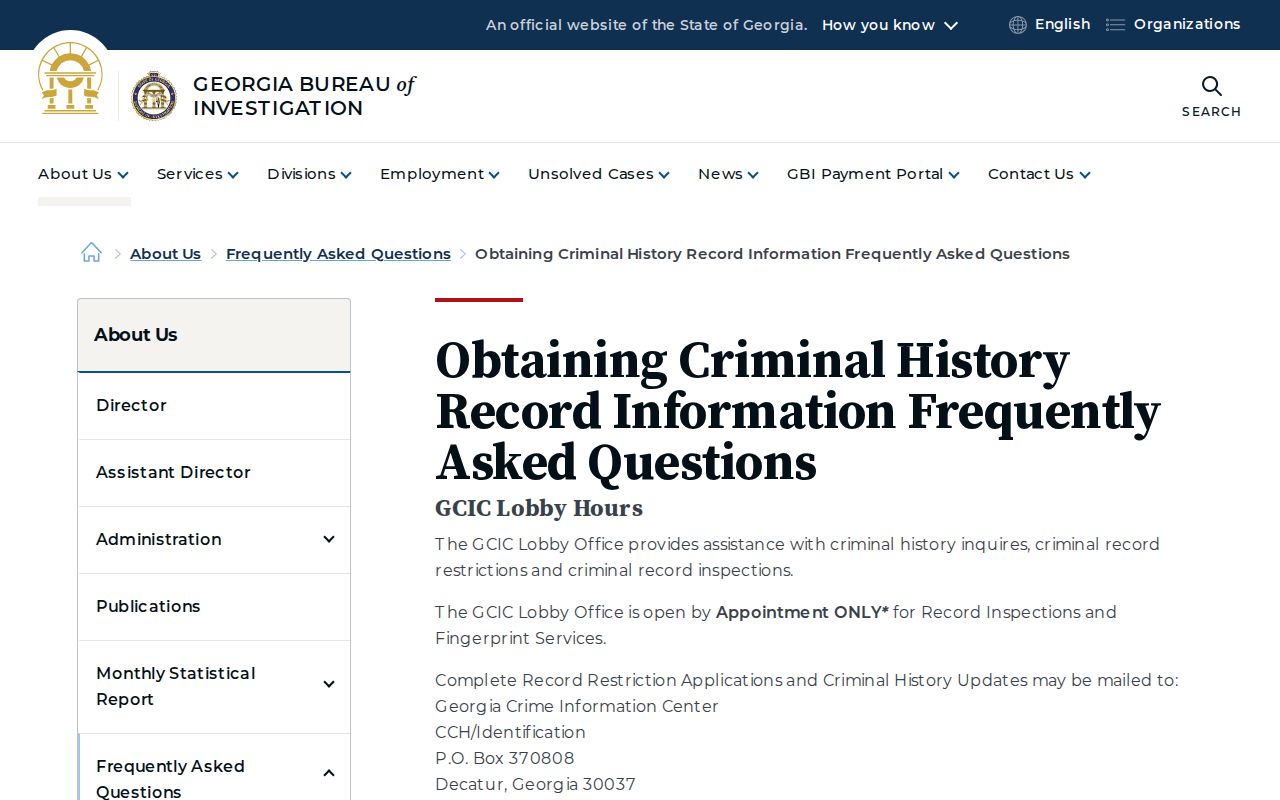
It helps separate registry data from a broader criminal-history record.
The GBI restriction guide supplies this image.
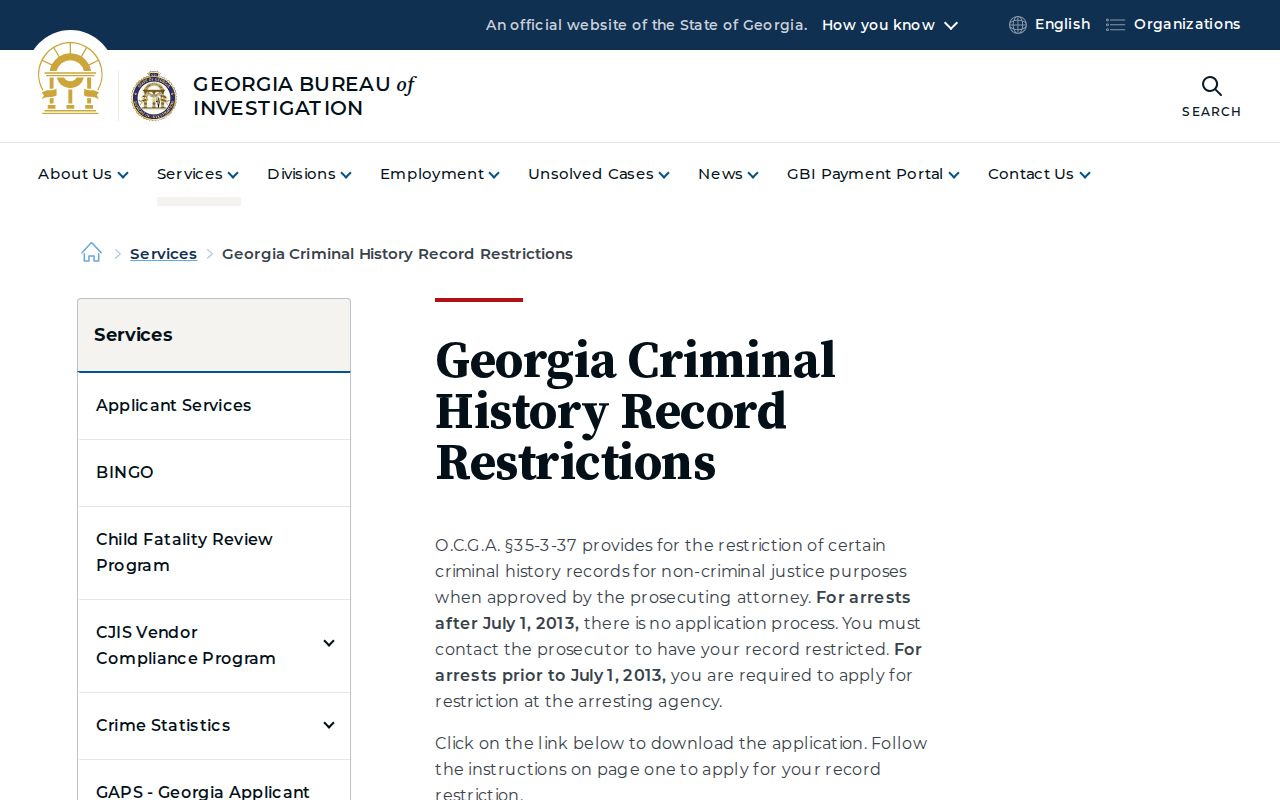
Record restriction and registry duties are separate systems, so one does not automatically remove the other.