
Criminal Cases in the Thomas County Courts
Thomas County does not have one criminal docket for every charge. Superior Court, part of the Southern Judicial Circuit, has general jurisdiction and hears felony cases. State Court hears most state-law misdemeanors and traffic cases. Magistrate Court handles warrant applications, first appearances, and preliminary functions. Municipal courts retain their own ordinance and traffic files.
The Thomas County Clerk of Superior Court is the key custodian for filed felony records. A court case may contain an accusation or indictment, motions, hearing notices, pleas, orders, and the final judgment. The arresting agency and jail hold separate reports. Searchers should therefore identify the court before requesting a file, especially when an arrest allegation later changed.
Thomas County Court Jurisdiction
The level of the charge controls the first records counter. A felony docket belongs in Superior Court, while a misdemeanor accusation commonly belongs in State Court. A warrant record at Magistrate Court is not proof that a felony conviction exists.
| Court | Typical criminal work | Best record question |
|---|---|---|
| Superior Court | Felonies and general jurisdiction | Indictment, plea, trial, disposition, sentence |
| State Court | Misdemeanors and traffic | Accusation, hearings, judgment |
| Magistrate Court | Warrants and first appearances | Warrant or preliminary-stage record |
| Municipal Court | City ordinance and traffic matters | Citation and city-court outcome |
How to Search Case Records
The county's CourtsCMWS docket is visible online, but its public landing screen is login-gated. It shows only User Name, Password, and Forgot Password controls before access. Do not assume that it offers an anonymous party-name search. The Georgia Judicial Gateway routes users to participating county systems, yet coverage and document access vary by county.
- Identify whether the matter is felony, misdemeanor, warrant, or municipal.
- Try the county docket only if valid access is available.
- Check the official court calendars for the named court and hearing type.
- Give the clerk a full name, case number, and approximate filing year.
- Request the docket or specific document, and state whether certification is needed.
| Field Label | Type | Required | Notes |
|---|---|---|---|
| User Name | Text | Yes | Account credential, not a party-name field |
| Password | Password | Yes | Required for docket access |
| Forgot Password | Link | No | Account recovery only |
Requesting Thomas County Court Files
When online access stops at the login screen, use the clerk's counter, phone, or mail channel. The clerk is at 325 North Madison Street, Thomasville, Georgia 31792, with weekday hours listed as 8 a.m. to 5 p.m. Ordinary U.S. mail sent to that street address may be returned, so mailed requests should use P.O. Box 1995, Thomasville, GA 31799. Confirm the current copy estimate before ordering.
Thomas County Clerk of Superior Court
325 North Madison Street
Thomasville, GA 31792
Mail: P.O. Box 1995, Thomasville, GA 31799
(229) 225-4108
Monday through Friday, 8 a.m. to 5 p.m.
The clerk's published fee page provides useful cost context, but a requester should ask which line applies to the specific criminal document and whether a seal is required.
The official fee page is also the source for the Thomas County copy-cost image below.
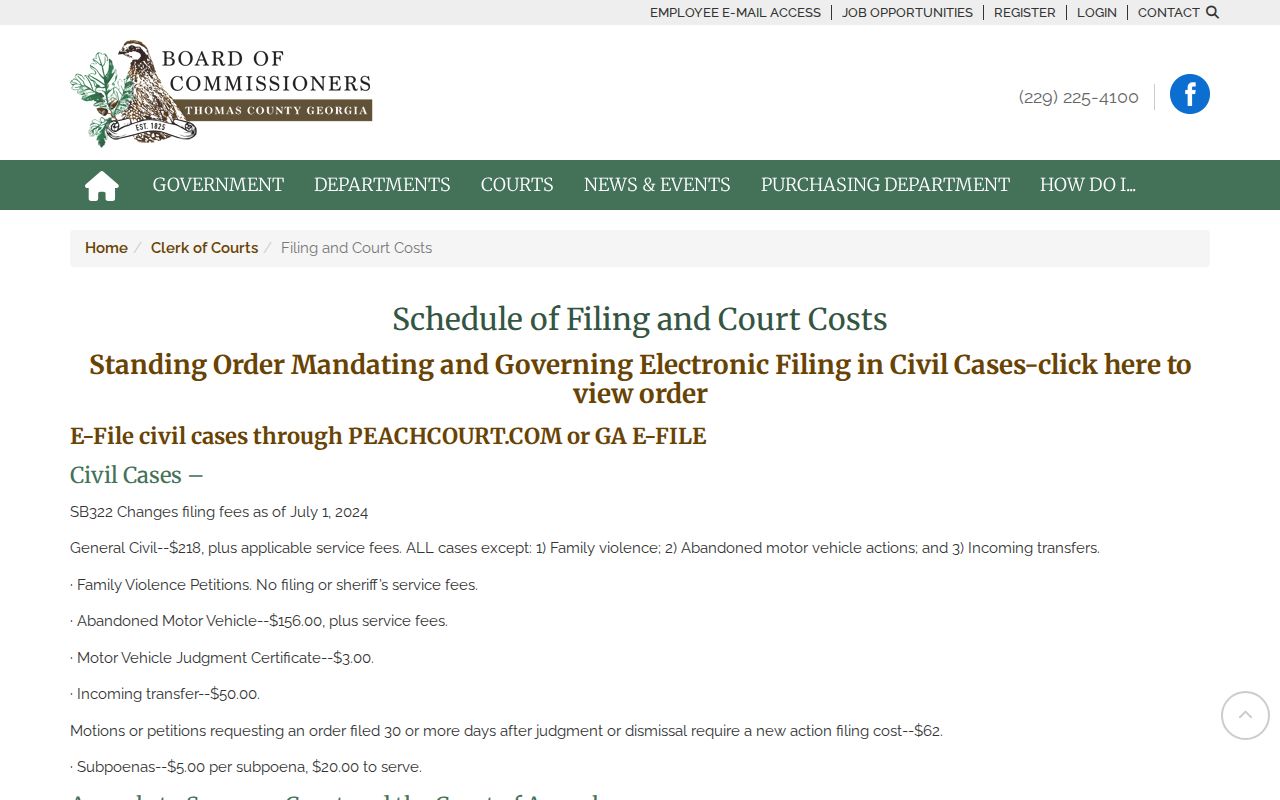
That page helps a requester distinguish an ordinary copy from a certified court record before placing an order.
What the Case File Shows
A Thomas County criminal case file records the prosecution as filed, not merely the allegation at booking. The docket is the chronological index. Individual documents supply the detail behind each entry. A final disposition states how the charge ended, while a sentencing order records punishment and conditions after conviction.
| Case Number & Court | Identifies the file, jurisdiction, and division. |
|---|---|
| Charging Document | Shows the accusation or indictment actually filed. |
| Docket Entries | Lists filings, notices, hearings, motions, and orders. |
| Hearing Dates | Shows scheduled and recorded court events. |
| Disposition & Judgment | States dismissal, plea, verdict, or other final result. |
| Sentence & Conditions | Records confinement, supervision, fines, and court conditions. |
Thomas County Criminal Calendars
The clerk publishes Thomas County court calendars for proceedings such as arraignments, pleas, bond matters, and revocations. A calendar is a schedule, not the final case history. It may help locate the court and date, but the docket and signed orders remain the stronger sources for outcome research.
The official calendar page supplies the image below and shows why hearing lists should be checked against the clerk's file.
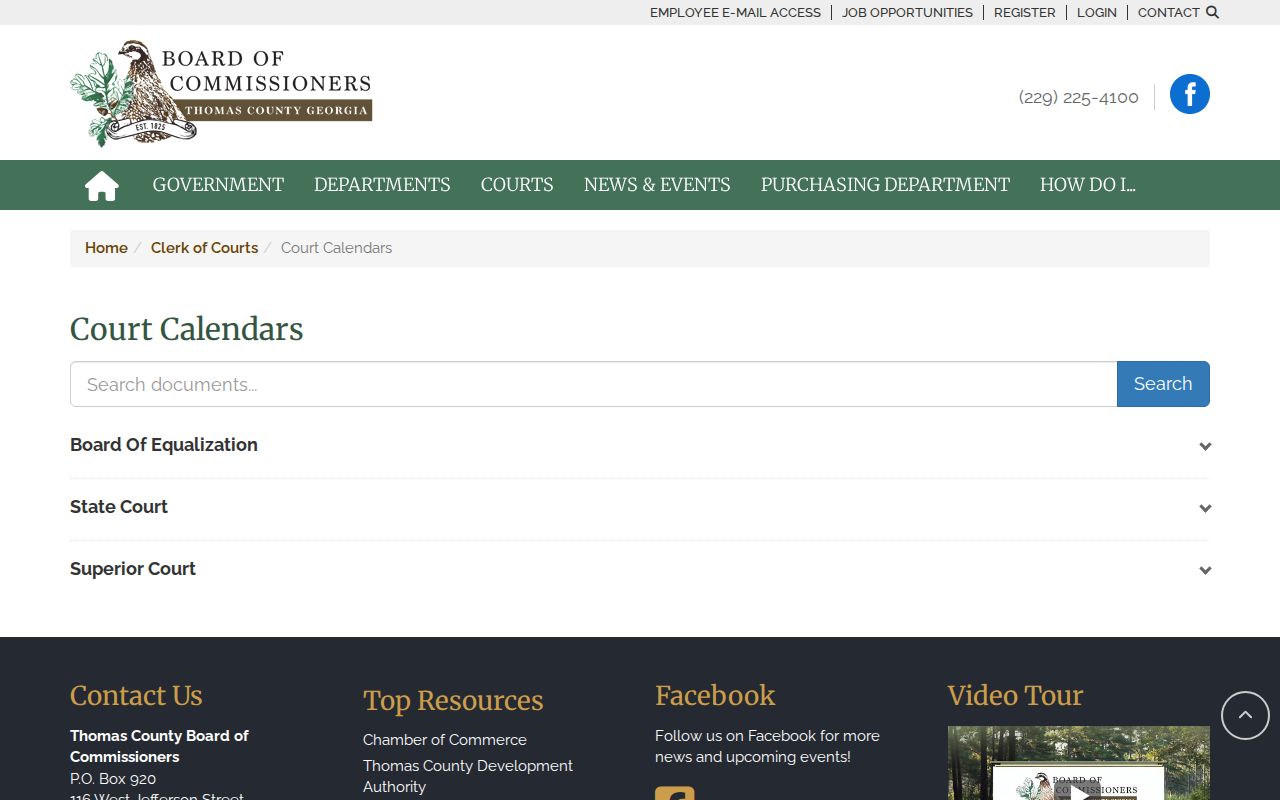
A name on a calendar indicates a scheduled event. It does not by itself prove what occurred or how the charge ended.
Note: Calendar entries can change, so confirm the current setting with the clerk before relying on a listed date.
Stages of a Criminal Case
The court file begins to answer the case question when prosecutors lodge a formal charge. An arrest charge may be reduced, replaced, or never filed. At arraignment, the accused receives the filed charge and enters a plea. Motions and hearings follow as needed. The case may end through dismissal, plea, trial verdict, or another authorized disposition, followed by sentencing if there is a conviction.
Case flow: Charges Filed › Arraignment › Pretrial › Plea or Trial › Disposition › Sentencing
Reading Thomas County Docket Terms
Several short terms can change the meaning of a Thomas County docket. Read them in context and request the underlying order when the entry is unclear.
- Accusation
- A prosecutor's formal charging document commonly used for eligible offenses.
- Indictment
- A formal charge returned through the grand-jury process.
- True bill
- The grand jury found enough basis to return the proposed indictment.
- No bill
- The grand jury did not return the proposed indictment.
- Disposition
- The recorded result of a charge, such as dismissal, plea, or verdict.
Choosing the Correct Thomas Court
A missing file often points to jurisdiction, not absence. Superior Court holds felonies, State Court holds most state-law misdemeanors and traffic matters, and Magistrate Court keeps warrant and first-appearance records. A city citation stays with its municipal court. Federal cases route to the Middle District of Georgia and PACER, outside the Thomas County clerk's local docket.
Use a full name, approximate filing year, arrest date, and known case or warrant number. Ask the clerk to check spelling variants and archived indexes. When several counts appear, request a count-by-count disposition because one dismissal does not resolve the rest. A certified judgment is stronger proof than a calendar entry or a possible match from Georgia Felon Search.
For one's own GCIC history, compare the statewide entry with the certified Thomas County disposition. A missing final outcome can be challenged through GCIC's correction process. Fingerprints, not a similar name and birth date, establish identity conclusively.
Copy requests should name the exact document when possible. Ask for the accusation or indictment to confirm filed charges, the docket to trace events, and the signed judgment to establish the outcome. Certification adds the clerk's official attestation when another office requires it. Request a current quote before sending payment because the published schedule covers several copy and seal products.
Thomas County court calendars add another route when the docket login is unavailable. Arraignment, plea, bond, and revocation calendars can identify the court and a scheduled date. They remain schedules, not judgments. Settings can move, and a name on a calendar does not prove what happened. Use the date and case number to request the resulting minute entry or signed order from the clerk.
Electronic certification also requires the right court and document. An account-based request can be rejected when the user selects the wrong jurisdiction or asks for material that court does not hold. Confirm Superior, State, Magistrate, or municipal jurisdiction first. For mailed Thomas County requests, use P.O. Box 1995 because the clerk warns that ordinary U.S. mail sent to the Madison Street address may be returned.
Specialty tracks named by the county include Felony Drug Court, Treatment and Accountability Court, and Veterans Court. Their names help a searcher recognize calendar or docket references, but published research did not establish eligibility standards. Do not infer admission, completion, or dismissal from a program label. Request the operative order and final disposition in the underlying criminal file.
When asking about an archived case, state whether the goal is the docket, one filing, or the full file. A narrow request can reduce retrieval time and cost. If the clerk finds no match, confirm the spelling, filing year, court level, and whether the matter began only as a Magistrate warrant without a later prosecution.
Access & Restrictions
Georgia court records are generally open, but access is not unlimited. Juvenile material, sealed files, protected victim data, medical details, and personal identifiers may be withheld or redacted. A record restriction at GCIC does not always remove the courthouse file. Court sealing can require a separate order under O.C.G.A. § 35-3-37(m).
If a Thomas County case does not appear online, ask the clerk whether the file is older, maintained outside the web index, sealed, or held by a different court. A login failure is not proof that no case exists. The official docket landing page shown below confirms that the county system begins behind credentials.
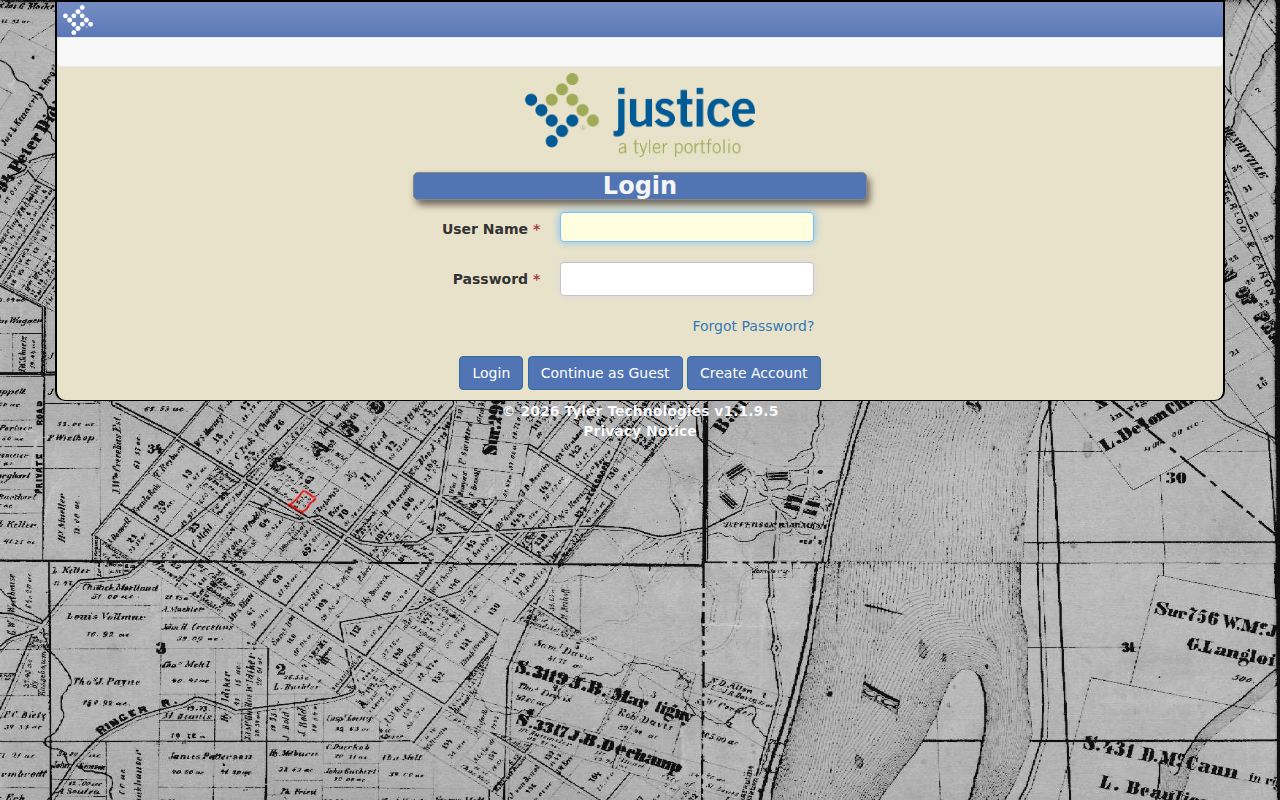
The login screen supports a counter or mail fallback when a public search is not available to the requester.
Thomas County court files and the $15 Georgia Felon Search are not substitutes. The state search returns possible Georgia felony-conviction matches and omits misdemeanors, juvenile history, and restricted material. The local file can show dismissed counts, motions, and the exact judgment.